Ideas
Success in many areas of life comes down to distilling broad knowledge into a few essential and time-tested ideas, then practicing them consistently. This page is my framework of those ideas for investing and financial planning, organized into seven themes.
Each idea starts with a key insight from a favorite book and ends with how I put it to work for clients.
Surviving randomness
Judge decisions by their reasoning, not short-term results.
 From Fooled by Randomness
Every investment result is one of many possible outcomes. For example, an investor can get lucky betting on one stock and beat a diversified portfolio. That doesn’t make it smart. With enough gamblers, someone always looks brilliant.
Results are visible and reasoning isn’t, so we default to grading results. In a field as luck-driven as investing, that’s like judging poker skill by a single hand. The better test is whether a decision would still make sense if the cards were dealt again.
That’s why I don’t chase strategies with the best recent returns or let one good or bad year rewrite a plan. When I recommend that a client gradually reduce a concentrated stock position, we judge the decision by the risk it reduces, not by whether the stock goes on to rise or fall. After every meeting, I email a summary of what we decided and why, so we can later evaluate the reasoning and not just the result.
A few unpredictable days and stocks drive most of your returns.
 From The Misbehavior of Markets
Only 46 companies accounted for half of the wealth created in the US stock market over the past century. Over the 20 years ending in 2025, the S&P 500’s ten best days delivered half of its gains. Miss the right stocks or days, and you miss most of the return.
Who could have predicted the rise of US Steel, then AT&T, then IBM, then Apple, then Nvidia? That improbability is a big reason why 90% of actively managed US stock funds underperformed the index from 2010 to 2025.
Many years ago, I spent thousands of hours designing models that shifted between investments based on patterns in historical data. The longer I tested them, the clearer it became that a model built to fit the past cannot predict the future.
This is why I don’t time the market or hold only part of the global stock market, such as one region, value funds, or dividend payers. I recommend Vanguard’s Total World Stock ETF more than any other stock fund and it’s my largest personal investment.

The future is more than a longer version of the past.
From Fooled by Randomness
History is an incomplete guide because unprecedented events regularly happen. Until 1987, the S&P 500 had never fallen more than 13% in a day. Then it fell 20%. In 2019, a Danish bank paid homeowners interest on mortgages. The next year, oil prices went negative.
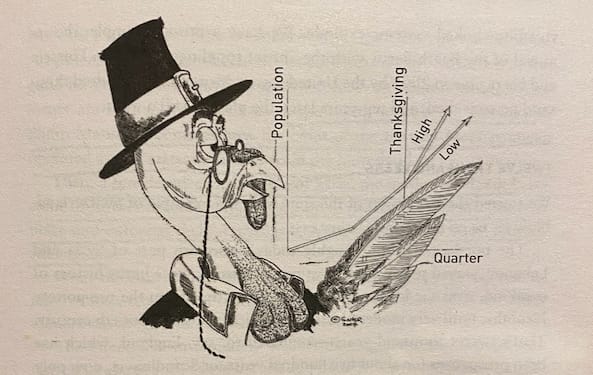
Treating history as the full range of what can happen is like a turkey in October thinking life on the farm will stay calm. So I stress-test client finances against crashes deeper than 2008’s, persistent inflation, and Social Security cuts. My plans build in buffers for below-average returns and above-average longevity so they don’t depend on a typical future.
Durability beats optimization.
From The Misbehavior of Markets
Shipbuilders design hulls for storms that may come once a decade. On a calm sea, that strength seems like overkill. We saw what happened to systems optimized for efficiency when supply chains broke in 2021. Anything built only for normalcy fails when conditions turn.
In investing, quiet markets make optimization look smart and durability foolish. In 2019, I explained to clients why short-term inflation-protected bonds belonged in their reserve for upcoming spending. Inflation had been low for so long that hedging against it felt pointless. I stressed that the protection cost little if inflation stayed low but would matter a lot if it didn’t. Two years later, a storm arrived.
Durability means giving up some returns and convenience in good years to survive bad ones. I sometimes advise contributing less to retirement accounts, swapping tax efficiency for liquidity to cover a move or career change. For couples where one person handles the money, I simplify finances so the other can step in during emergencies. None of this seems necessary in a calm stretch, but that’s when it has to be done.

Frequently checking investments turns noise into bad decisions.
From Fooled by Randomness
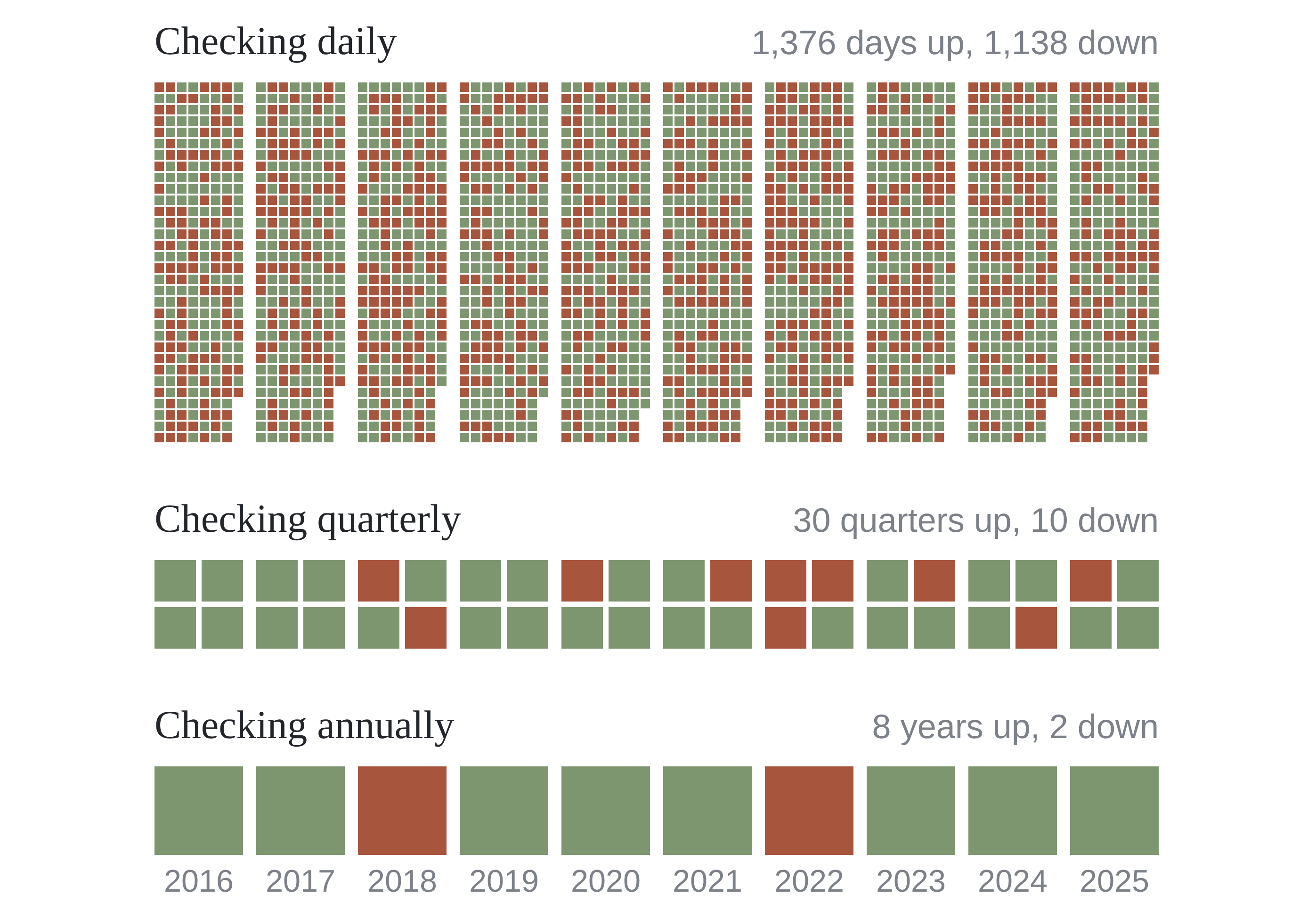
Just as a runner minutes into a marathon has no real information on how their race will go, your daily investment returns tell you nothing about long-term financial progress.
Checking your portfolio throughout the week guarantees you will see hundreds of temporary losses a year, each one registering emotionally as permanent. Part of the urge to monitor comes from finances being one of the few areas of life where we feel in control, so looking at accounts is a way to cope with uncertainty without reducing it.
Narrating noise makes it seem like signal, so I don’t flood clients with market commentary. Instead, we meet every few months to address questions and explore new planning opportunities. For retirees, each winter I move the next year of spending to their high-yield savings account so paying bills never requires looking at the portfolio.
Rethinking risk
Investment risk depends on what your money is for.
 From The Four Pillars of Investing
Ask most people if stocks or cash are riskier and they’ll say stocks, equating risk with volatility. Yet over time, cash has steadily lost purchasing power. The real risk is falling short of your goals. That can mean not having enough to live how you want or staying in a job you can’t afford to leave.
Need $100,000 for a home renovation next year? A high-yield savings account is the safe choice, because a stock fund could be down 10% in a month. Need savings to grow over 20 years? A diversified stock fund is the safe choice, because cash won’t keep up after inflation and taxes.
Understanding someone’s cash flows comes before investment advice. For one business owner, this meant setting aside enough to fund a pivot and investing the rest. When a market panic has someone wanting to sell, I show them what a less volatile portfolio could cost in lost growth. That way, they see selling as swapping one risk for another.

Fast growth does not mean strong returns.
 From Triumph of the Optimists
It seems intuitive that a fast-growing country or industry would be a good place to invest. Think Japan in the late 1980s and China in the 2010s. Yet across a century of data, the relationship between a country’s economic growth and its stock market returns is nil. The same holds for industries: telecom in the 1990s, homebuilders in the 2000s, and shale producers in the 2010s.
Two things work against obvious growth stories. First, growth everyone expects is already in the price. Second, growth requires capital, which comes from borrowing or issuing shares. The sector rapidly expands, but so does the number of claims on it, diluting existing owners.
In practice, I don’t tilt investments toward a country or industry because its future seems bright. This also applies to private markets and is why I’ve steered clients away from deals projecting high growth without accounting for the reinvestment it requires.

Diversifying keeps one country’s fate from becoming your own.
From Triumph of the Optimists
In 1907, an investor in St. Petersburg had no way of knowing their stock market would be wiped out within a decade. Neither did someone in New York in 1929 or Athens in 2007. Each would watch most or all of their lifetime savings disappear. Elsewhere, the Swedish and Australian stock markets soared. An investor who owned the whole world, ruined and thriving markets alike, still came out well ahead.
The fate of a nation over your lifetime is unknowable, so concentrating wealth in one is a bet you can’t afford to lose. That’s why every client owns a globally diversified portfolio. The same thinking extends to the rest of their wealth: a client with big euro expenses keeps some reserves in euros, and another selling local rentals reinvests abroad rather than doubling down on one country and currency.

Stocks earn more because their owners are paid last.
From Triumph of the Optimists
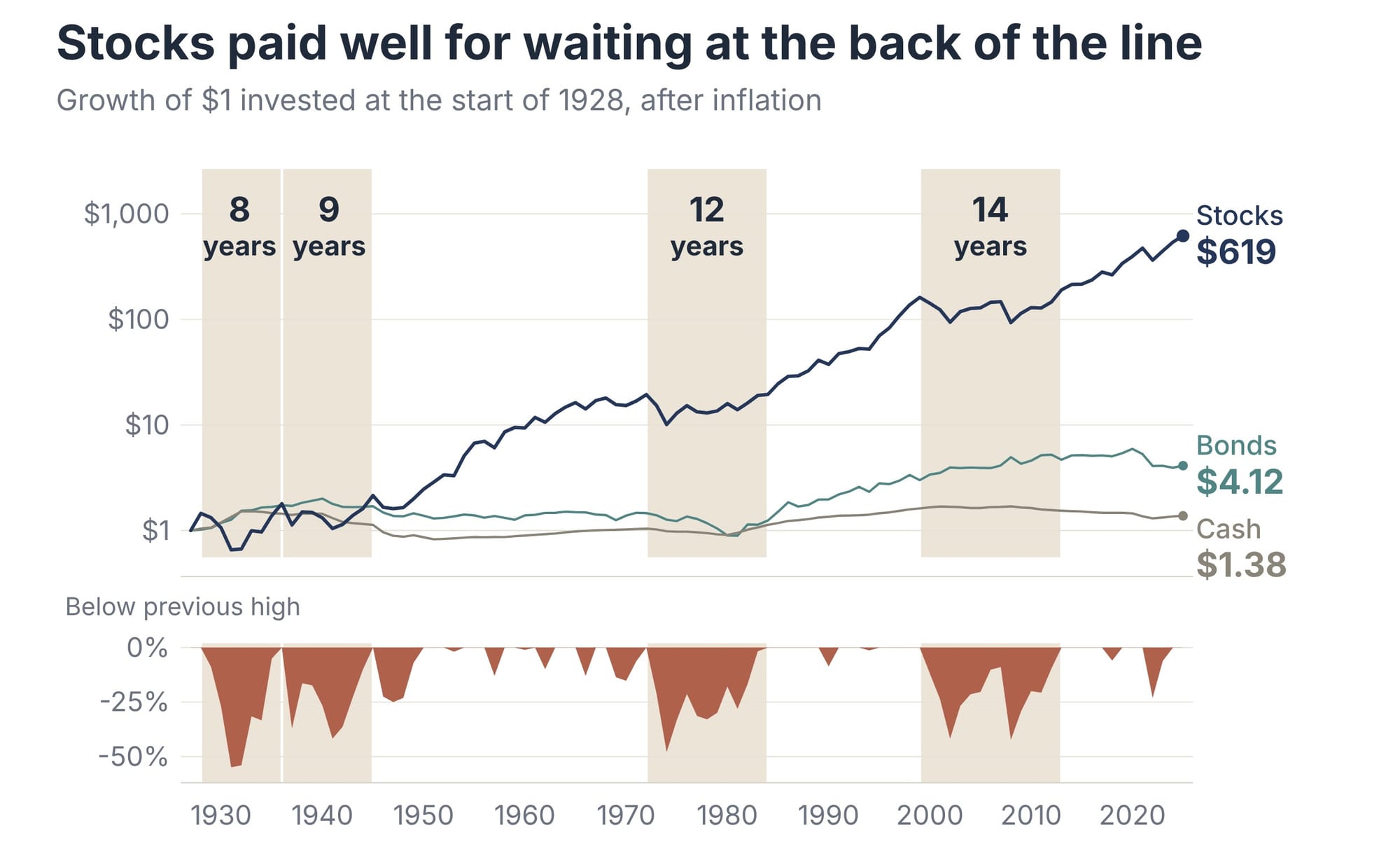
Across 16 countries and over a century, stocks outperformed bonds and cash by a wide margin. Why? Businesses pay lenders principal and interest on a schedule, while stockholders get whatever is left whenever it’s left. The higher expected return of stocks reflects the risk of being last in line.
Most people think this risk is a sudden crash. More damaging are multiyear stretches when stocks underperform cash, as in the 1970s and 2000s. A decade that feels wasted drives investors to throw in the towel, as many did in 2009. A strong run does the opposite, convincing others stocks only go up.
To protect against both extremes, I design plans around when money is needed rather than a client’s age. A 70-year-old’s Roth IRA that won’t be touched until the next generation may be entirely in stocks, while a 30-year-old’s house reserve may be in cash or bonds.
When clients ask if stocks are overvalued, I tell them a well-built plan doesn’t rely on the answer. Since their next decade of spending isn’t riding on the stock market, they can sit tight in a downturn and stay grounded in a boom.
Questioning crowds
Wealth and fame are mistaken for wisdom.
 From A Short History of Financial Euphoria
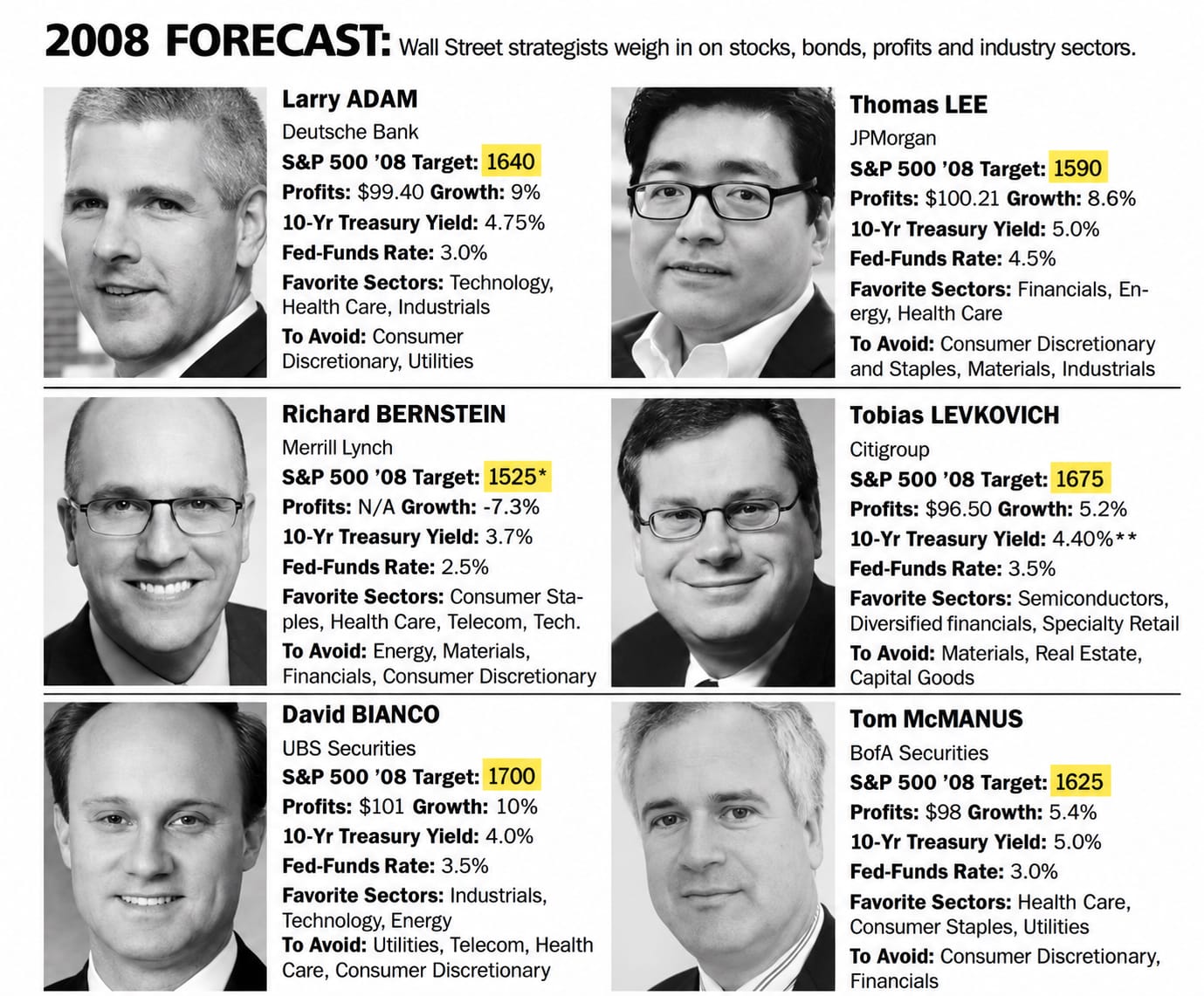
Financial news spotlights what rich and famous people think, as if wealth and fame are evidence of wisdom. Sometimes they are, but they can also reflect luck or skill in another field. Political scientist Philip Tetlock tracked expert predictions over two decades and found that the most famous were less accurate than their obscure peers. The traits that make someone quotable are not the traits that make them right.
When I see a video calling the next crash or an article predicting AI will double economic growth, I first weigh the argument’s logic rather than who is making it. Then I test how a client’s plan would fare if the thesis proved correct. When one client asked if deficits would sink the dollar, I agreed the risk was real, then showed he was diversified across assets that held up through currency crises in Britain and Germany.
Investor amnesia makes every bubble feel new.
From A Short History of Financial Euphoria
Lessons from financial disasters fade as the people who lived through them age and lose influence. Investors who remembered 1929 were retired by the 1970s Nifty Fifty boom, when 50 stocks were deemed safe to buy at any price. The dot-com crash was likewise ancient history to SPAC buyers in 2021, who poured money into shell companies.
Each bubble brings new technology and vocabulary, but the pattern repeats: a compelling story, rising prices taken as proof the story is true, borrowed money, and belief that this time is different.
Part of my job is to know financial history clients haven’t lived through. For someone who has only invested during rising markets, I spell out in dollars what a normal correction would do to their balances. I can’t tell whether a boom will continue or when a crash will end, but I can show how investors have sabotaged themselves in both and help clients avoid repeating those mistakes.

Who owns an investment shapes how it behaves in a crisis.
 From The Crisis of Crowding
Investors often treat correlations as constants. Many expect gold to rise during financial stress, bonds to offset stock losses, and Bitcoin to move independently of other assets. In reality, two economically unrelated investments can move together if the same people own both and are forced out at the same time.
Forced sellers don’t sell what they want to sell. They sell what they can. So correlations that seemed stable for years can break down in days. We saw this when gold fell as much as the stock market in October 2008, Treasury bonds failed to counter stock losses at the height of the March 2020 panic, and Bitcoin fell with tech stocks in 2022.
I don’t build portfolios that depend on past correlations holding. When someone brings me a strategy that has worked beautifully for years, my first question is: who else is in it now? When clients are pitched private funds, I ask: are managers promising more liquidity than their investments can deliver? I would rather own something I never need to sell than something clever I have to exit before everyone else.

Leverage can convert a survivable decline into a permanent loss.
From The Crisis of Crowding
Without borrowed money, losing 33% makes for a bad year. Painful, but recoverable. With 3x leverage, a 33% decline wipes you out even if the investment recovers. Adding leverage to volatile assets hands someone else the decision of when to sell. Forced selling is at the heart of implosions like Long-Term Capital Management in 1998 and the near-collapse of Situational Awareness in 2026.
So I don’t borrow to amplify client returns with margin or leveraged ETFs. I also watch for leverage hidden in funds advertising high yields and recommend paying down debt when a loan’s cost exceeds what investments can conservatively earn after tax. Owning investments outright keeps the decision of when to sell with my clients, so a bad year never becomes the last one.

Knowing yourself
The reason people give for a decision is not always the real one.
 From The Elephant in the Brain
J.P. Morgan reportedly said a man has two reasons for doing something: a good reason and the real reason. The trouble is we often can’t tell which is which, and some stroke patients show how far that can go.
Damage to the brain’s right hemisphere can paralyze a person’s left arm and leave them unaware of it. When asked to lift the arm, they say they’re tired or their shoulder is sore. The explanations sound reasonable but are made up. Neuroscientist Michael Gazzaniga showed that everyone’s brain has an interpretive “press secretary” explaining decisions even when it has no clue why we make them.
In investing, the press secretary speaks the language of valuations, interest rates, and geopolitics, because those sound respectable. The real reasons, like a need for control and fear of regret, rarely get said.
So when a client raises the same worry twice, I take it as a sign I answered the wrong question the first time. Sometimes the math favors one choice and a client’s peace of mind favors another, like whether to pay off a mortgage early or when to file for Social Security. If their plan is on track either way, I’ll often back the choice they can better live with.

Part of what you buy in an investment is what it says about you.
From The Elephant in the Brain
Nobody wonders what a broom says about them, but most people have strong opinions about their car. The more visible and discussion-worthy a purchase, the more likely it’s bought for what it signals.
Investments work the same way. Saying you use a sophisticated strategy pays a social dividend, because part of what you buy is a sentence to sound smart. This is why simplicity can be hard to stick with: good portfolios rarely give you anything intellectually impressive to say.
I resist sophistication for its own sake, such as having a take on every market move or recommending smart-sounding minutiae that don’t affect a plan. With elaborate trusts, insurance products, or tax-reduction strategies, I’ll often show how something simpler does the same job.
Sometimes the signal is only for yourself. People who’ve always thought of themselves as frugal may keep pinching pennies long after they need to. For retirees who haven’t acclimated to wealth, we settle on an amount they can safely spend and give. This helps anchor them to what they can afford rather than who they’ve always been.

Risk tolerance is a state as much as a trait.
 From The Hour Between Dog and Wolf
We like to think financial decisions are rational, but they depend heavily on our physical state. In one study, volunteers given hydrocortisone to mimic prolonged market stress became more risk averse. Testosterone pushes the other way, as young men given it invested more aggressively than on a placebo. The same person can be a different investor from one month to the next.
I build in two safeguards for this. First, I discuss major decisions with clients in one meeting and finalize them in the next, so that we both sleep on it. Second, when a client wants to increase or decrease risk, we separate what has changed in their life from what has changed in the market. Retiring, selling a business, or losing a spouse can justify a new plan. A few good or bad months can’t.

Financial stress primes you for action, so staying put is hard.
From The Hour Between Dog and Wolf
The stress response prepares our bodies to move. For most of our history, threats required running or fighting, and today we react the same way to a bear in the woods or red numbers on a screen. This is why “do nothing” is easy to say but physically hard to do.
The urge to act shows up for investors as unnecessary trading and strategy switching. An MIT study of 650,000 accounts found that panic selling spiked during sharp declines, and nearly a third of those who sold never got back in.
You can’t reason away the urge to act, but you can redirect it. So when markets get choppy, I meet with clients to revisit their plan, rebalance, and harvest tax losses. Sometimes the most important work is what we don’t do, and keeping clients invested in March 2020 was as valuable as any visible win.

Uncovering costs
A flat advisory fee means you never pay more for having more.
 From Where Are the Customers’ Yachts?
An old Wall Street story has a visitor admiring the yachts of bankers and brokers, then asking his friend where the customers’ yachts are. The friend laughs. Nearly a century later, the financial industry is still full of people skilled at turning your money into their money.
In 2015, I started this business charging the typical fee of 1% of assets under management, or $30,000 per year for managing $3 million. I grew uncomfortable billing two clients wildly different fees based on their balances when I was spending similar amounts of time advising them. A percentage fee can also bias an advisor against recommendations that reduce assets under management, like buying a home with cash or spending more in retirement.
In 2019, I switched to a flat fee. The standard fee for new clients is currently $8,000 per year. My clients collectively save hundreds of thousands of dollars per year compared to paying an advisor 1%. Over time, those savings could even buy them a yacht.
An investment too small to matter is too small to own.
From Where Are the Customers’ Yachts?
I sometimes meet with people who want to put a small amount into an investment. Each new line item makes a portfolio seem more diversified, but small holdings rarely affect performance enough to matter.
Say you put 3% in something and it luckily grows at 14% per year, double the 7% it would have otherwise earned. That will add 0.21% to your annual return, barely registering on the financial Richter scale. Small holdings also mean more to track and tinker with. An investment that can’t change outcomes shouldn’t add cost or distraction.
So I keep client portfolios to a few core funds. Any new investment has to be big enough to make a real difference, not just a rounding error. One couple came to me with ten accounts and more than 300 holdings. Today they have five accounts with four core holdings, pay less in fees and investment taxes, and finally understand what they own and why.
Financial media is built to harvest your attention, not help you.
 From The Attention Merchants
In the 1930s, soap operas were born when soap companies created radio shows around their ads. The dramatic stories never ended because closure would mean the audience went elsewhere. Today, content creators earn ad, sponsorship, and subscription revenue based on how much of your time they capture. That incentivizes them to keep you alarmed and paying attention.
When clients send concerning articles or videos, I first check if the claims are valid and relevant. Then I explain that the creator is playing a different game than us. Their game is to monetize engaging content. Our game is to make good financial decisions.
I know that game because I played it years ago, writing blog posts to attract early clients. It worked, and I’m glad I no longer need to optimize titles and thumbnails. Now I can do the opposite by helping clients spend less time thinking about money.
Protecting growth
Owning the whole market beats chasing an edge.
 From A Man for All Markets
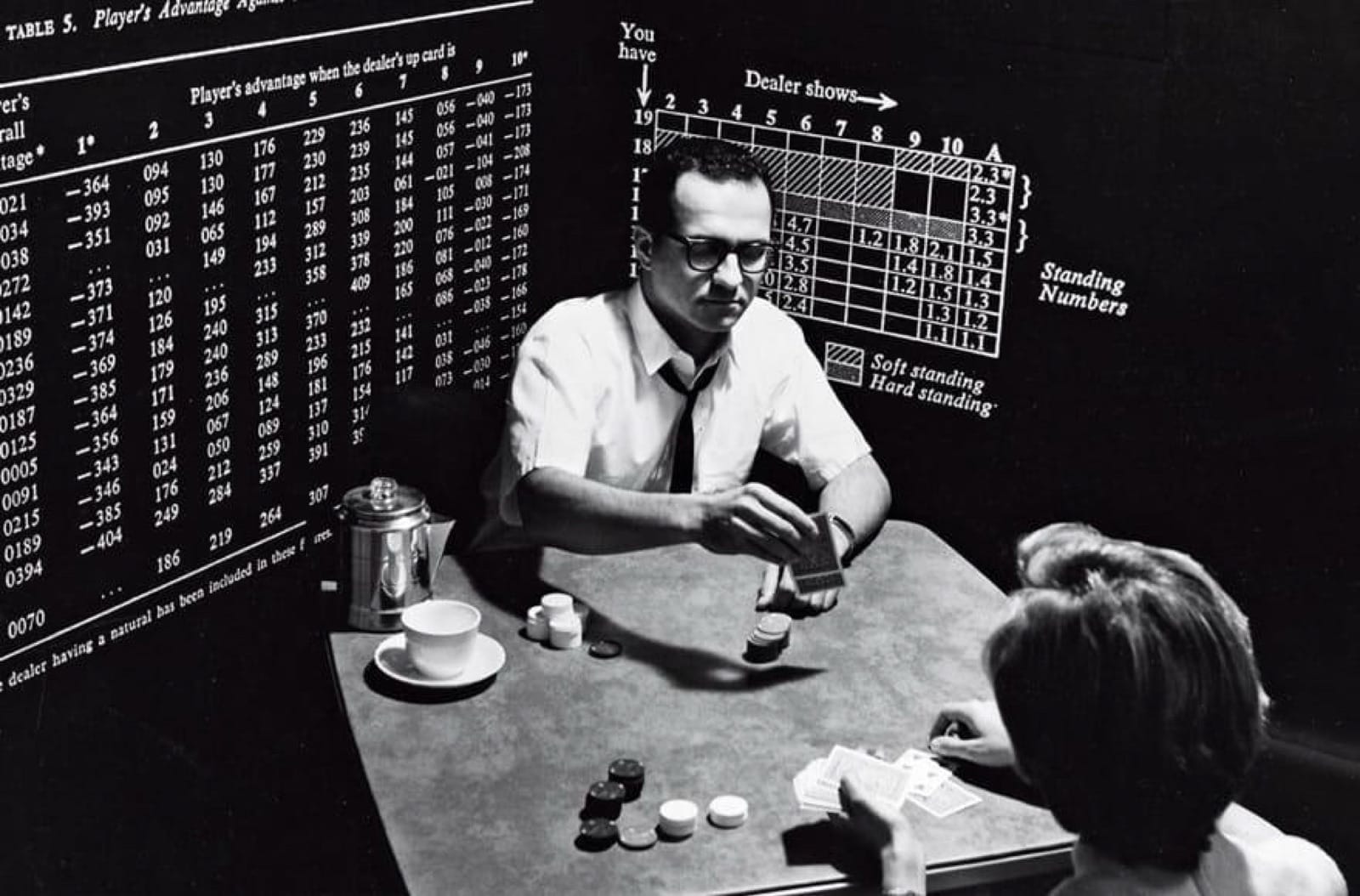
Ed Thorp proved card counting could beat blackjack and later ran a hedge fund that returned 19% a year for two decades. Yet after he retired, he concluded that for almost everyone, edges in financial markets were no longer worth chasing. His advice was to own a few low-cost index funds, which he put into practice with his endowment to UC Irvine.
Thorp knew that a sustainable edge requires rare skill, early insight, and relentless work. An edge can only absorb so much capital before it stops working, which is why the people who have one don’t want your money. Renaissance’s Medallion Fund, arguably the best track record in history, has been closed to new outside investors since 1993.
Markets have never been easier to access, but access shouldn’t be confused with potential for advantage. When an investment claims to beat the market, I ask who is on the other side of the trade and why they would keep losing.
Owning the whole market doesn’t require an answer to that question. Index funds are what Thorp recommended and what I choose for clients.
Uninterrupted growth is where most wealth comes from.
From A Man for All Markets
Take two people starting with $1, who both double their money ten times. One takes out their $1 profit after every doubling and ends with $11. The other leaves everything in and ends with $1,024.
A dollar needlessly missing out on compound growth (by trying to time the market or being lost to avoidable taxes) isn’t just a dollar. It’s the future growth that dollar would have produced. Long-term wealth building comes from not interrupting that process.
For savers, I prioritize investing in tax-efficient accounts and funds. For retirees, I coordinate withdrawals and Roth conversions to minimize taxes over a lifetime rather than one year. I also look for slow leaks, like rising costs in universal life insurance or cash gifts to charity when donor-advised funds or qualified distributions would save more.

Knowing better isn’t the same as doing better.
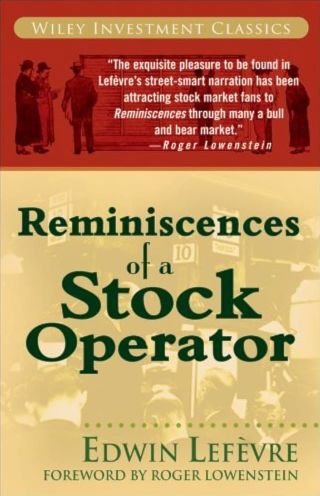 From Reminiscences of a Stock Operator
Jesse Livermore was one of the most successful traders of the early 20th century. In 1918, he cornered the cotton market so tightly that Woodrow Wilson reportedly asked him to unwind the position. Shorting the stock market made him $100 million in the 1929 crash.
Livermore’s undoing was that he couldn’t stick to the rules he knew worked, losing his fortune multiple times. In 1940, he shot himself in the coatroom of Manhattan’s Sherry-Netherland Hotel. His life shows that good rules only work if you follow them.
That’s why I’m an accountability partner who turns financial intentions into action. Every meeting ends with emailed to-dos, and open items stay on the agenda until they’re done. This way, plans that are easy to let slide (like investing idle cash, updating insurance and estate documents, and staying invested amid scary headlines) actually happen.
Reminiscences of a Stock Operator, the thinly veiled story of Livermore’s trading career, was the first financial book I fell in love with. I was 16, and by 20 I knew what it felt like to make (and lose) $50,000 in a day. Back then, I read it as a playbook. Today, as a warning.
Defining enough
Analytic thinking is an excellent servant and a terrible master.
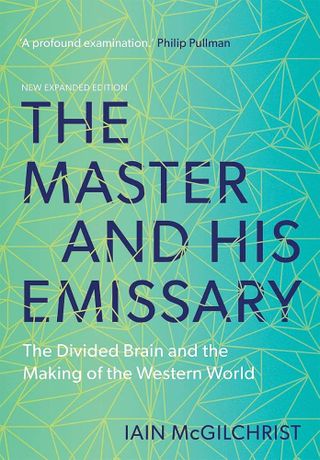 From The Master and His Emissary
Why are our brains, like those of all vertebrates, divided in two when a unified system seems like it would work better? Iain McGilchrist shows the division stems from the competing needs of focused attention to eat and broader attention to avoid being eaten. The left hemisphere picks things out and puts them to use. The right pays wider attention, keeping the whole scene and anything new in view.
McGilchrist calls the right hemisphere the master and the left its emissary. While the left is a brilliant servant, things can go wrong when it forgets who it should work for.
Left-hemisphere analytic thinking dominates the financial world, modeling and putting numbers on everything. Think of net worth projected 30 years out, year-end market forecasts, and advisors putting a dollar figure on the value of their advice. The danger is that model outputs start to feel like facts.
Good thinking moves from the whole to the parts and back to the whole. This is how I plan, first paying attention to the bigger picture of how a client’s life is changing and then using precise tools for problems precision can actually answer.
Those problems include working out whether a young family can afford for one parent to stay home with a new baby or calculating how much a retiree needs in safe assets to bridge the years until RMDs and Social Security begin. When a client’s life differs from initial projections, I change the model rather than asking them to live up to it.
What can be counted comes to seem like all that counts.
From The Master and His Emissary
Analytic thinking breaks wholes into parts it can count, and over time what can’t be counted seems less real. During the Vietnam War, Defense Secretary Robert McNamara measured progress through enemy deaths because they could be tallied and compared. The numbers kept looking better while the war slipped away.
Money is the most countable thing we have: incomes, balances, and returns. Much of what makes a life good, like a longtime friend and work you’re proud of, can’t be counted at all. So metrics morph into the goal and people trade away unmeasurable aspects of their lives for what’s easy to quantify.
I discourage clients from tracking their financial lives in elaborate spreadsheets, contorting spending for credit card points, and chasing marginally higher savings interest rates. Instead, I encourage them to focus on the few numbers worth counting, like their savings or withdrawal rate and the insurance coverage needed to withstand a catastrophe. Numbers like these protect a plan. Beyond them, counting tends to compete with your life rather than serve it.

Keeping a good plan beats endlessly chasing a perfect one.
 From Four Thousand Weeks
Every financial choice gives something up. A bigger house means more space and less saved. Retiring earlier buys freedom and costs years of saving. A portfolio built to survive a crash will trail in a boom. Investors who can’t accept this keep chasing what they don’t own or didn’t do, switching plans before any has time to work.
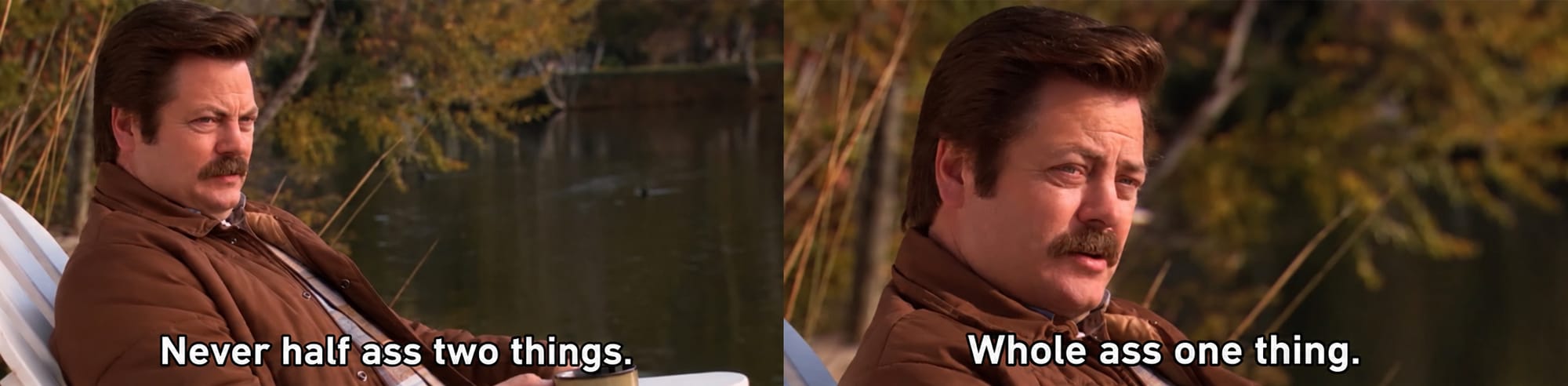
Warren Buffett reportedly had his pilot list 25 goals and circle the top five. Buffett said to avoid the other 20, because they were tempting enough to distract him from what mattered. Money works the same way: spread it across too many goals and the top ones go underfunded.
As clients face big financial decisions, I make these trade-offs visible. When one family considered building a larger home, I showed them it would push their planned retirement age back three years. They built it knowing what it cost beyond the purchase price.
Money as a scoreboard has no finish line.
 From The Conquest of Happiness
Bertrand Russell traced much of the unhappiness he saw among successful people to treating money as the yardstick of a good life. When you measure wealth against others, enough never arrives because the finish line keeps moving.
After thousands of client meetings, I’ve learned that those who chase open-ended targets like higher salary or net worth tend to be perpetually dissatisfied. What drives them is usually a mix of comparison with others and a fear of not having enough. Yet among diligent savers, it’s far more common to end up with too much than too little. Almost all my older clients have a large surplus they can safely spend or give away.
The fix for an ever-moving goal is a concrete definition of enough. For those still working, that’s a yearly savings target. For retirees, it’s a sustainable annual spending number. When clients weigh a career change, I measure it against what their plan needs rather than what they used to earn. This clarity frees people to take work they actually want once they see they have enough.